We have all been there. You slide into the driver's seat, smell the fresh upholstery, and suddenly you are picturing weekend road trips. Salespeople bank on that emotional rush. But buying a vehicle is one of the largest financial commitments you will make. With average new vehicle transaction prices hovering between $48,000 and $50,000,¹ and three-year-old used models topping $30,000, you cannot afford to let excitement cloud your judgment.
Yet, AutoTrader and Cox Automotive research shows that nearly 49% of shoppers spend under 30 minutes on their test drive, while roughly 16% skip it completely.² That is a huge mistake.
A proper test drive takes 20 to 30 minutes. It requires a quiet, methodical inspection split between cockpit ergonomics and mechanical dynamics. Here are the seven important things you must evaluate before signing your name.
Mastering the Mechanics of Braking, Steering, and Handling
The mechanical foundation of the vehicle determines whether it is safe, dependable, and pleasant to pilot. Focus on what the controls are telling your hands and feet.
• Braking Dynamics and Rotor Condition: Find an empty stretch of road, bring the car up to 45 mph, and execute a firm stop. Does the pedal feel high and firm, or does it sink toward the carpet? If you feel a vibration through the steering wheel when braking lightly from 60 mph, the front brake rotors are warped. If you feel that vibration through your seat cushion, the rear rotors are uneven. On hybrids or electric vehicles, pay attention to the transition between regenerative braking and hydraulic calipers at low speeds. A jerky stop right around 5 mph means poor brake-by-wire calibration.
• Steering Alignment and Front-End Wear: On a flat, level road at highway speeds, loosen your grip for a couple of seconds. The vehicle should track straight. If it pulls hard to the left or right, you are dealing with improper alignment, uneven tire wear, or hidden frame damage. Next, take the car to an empty parking lot and turn the wheel to full lock in both directions while driving slow figure-eights. Clicking or popping noises point directly to failing constant velocity joints. Heavy binding on an all-wheel-drive model can mean a damaged transfer case or center differential.
• Suspension Rebound and Control Arms: Dealers love routing test drives over freshly paved asphalt. Insist on finding railroad tracks, rough patches, or speed humps. When you hit a speed hump at 15 mph, the car should compress, rebound, and settle in a single clean motion. If it continues to bounce, the shocks are worn out. A sharp metal clunk over bumps indicates worn sway bar end links or cracked control arm bushings.
The Silent Inspection for Unusual Noises
The easiest way to miss an expensive mechanical problem is driving with the sound system playing and the salesperson talking your ear off. Politely ask for complete silence during part of your route.
• Cold-Start Behavior and Powertrain Sounds: Insist that the car is completely cold before you turn the key. A warm engine can easily hide a failing starter, dying battery, or worn timing chain tensioner. Touch the hood before starting to verify it is cold. Turn the ignition without touching the gas pedal. Listen for any metallic rattle or chain slap during the first three seconds. If you see blue smoke from the exhaust pipe, the engine is burning oil. Sweet-smelling white vapor that lingers after the car warms up usually points to an internal coolant leak.
• Cabin Resonance and Acoustic Checks: Once you reach highway speeds of 65 to 70 mph, shut off the climate fan and radio for a full five minutes. Listen closely for wind buffeting around the side mirrors and door seals. Pay special attention to a low-pitched hum that changes pitch when you gently steer left and right. That sound is almost always a failing wheel bearing.
Daily Living, Comfort, and Visibility
Mechanical problems can often be fixed with money, but bad interior geometry is permanent. You will live with your seating position every day, so do not compromise.
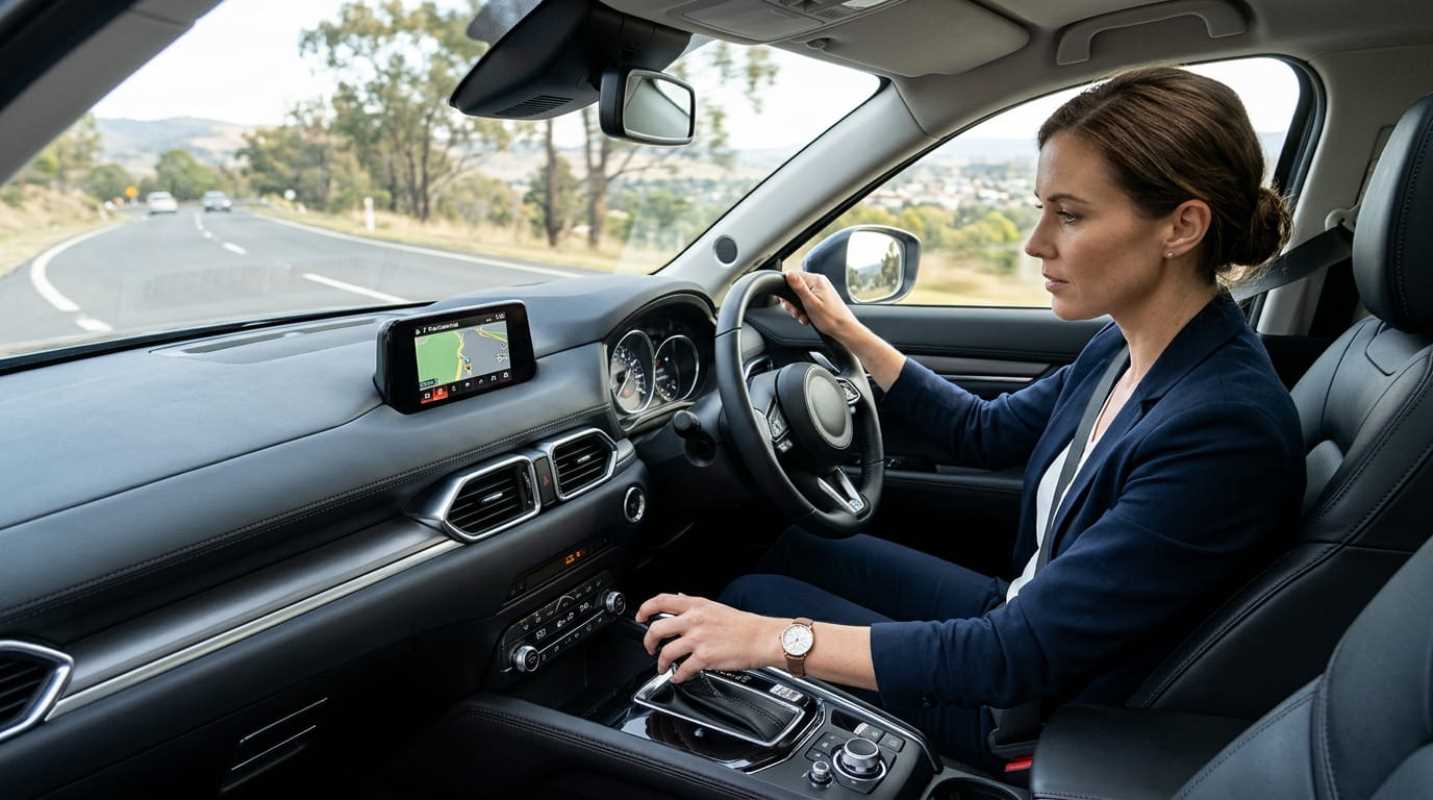
• Driver Geometry and Visibility Sightlines: Test the full travel of the seat and steering wheel. Check the pedal box alignment. Many modern vehicles push the pedals toward the center tunnel to accommodate wide crash structures. This forces your right leg inward, creating lower-back fatigue on long road trips. Next, check your 45-degree sightlines. Modern rollover standards mean roof pillars are thicker than ever. Make sure the front pillar and side mirror do not completely block a pedestrian walking across an intersection.
Tech, Features, and Real-World Functionality
Vehicle screens keep getting larger, but more screen space does not equal better usability.
• Tactile Controls and Distraction Audit: Safety agencies like Euro NCAP penalize vehicles that bury basic operations inside digital sub-menus.³ Make sure the car gives you dedicated, physical switches for five fundamental items: turn signals, windshield wipers, hazard flashers, horn, and climate defrosters. Tap through the climate and media screens while parked. If the touchscreen takes longer than half a second to respond to a finger press, think about how frustrating that will be while merging onto a highway. Also, test the steering wheel controls. If your palm accidentally skips songs or changes cruise control settings during normal turns, you will regret buying it.
Here are our top picks for tools and services to assist your vehicle buying process.
Making the Confident Decision
By the end of your route, you will have a clear mental ledger of how the vehicle behaves. If something feels off, do not talk yourself out of your own observations. Use any flaws you discovered to negotiate a lower price, demand dealer repairs in writing, or simply walk away.
There are millions of cars on the market. Walking away from a bad test drive costs you an afternoon. Buying the wrong vehicle costs you thousands of dollars. Bring a small flashlight to inspect tire tread, carry a basic scan tool if you are buying used, and stick to your checklist.
Sources:
1. Cox Automotive September 2025 ATP Report
https://www.coxautoinc.com/insights/sept-2025-atp-report/
2. New Research: 1 in 6 Car Buyers Skips Test Drive
https://www.prnewswire.com/news-releases/new-research-1-in-6-car-buyers-skips-test-drive-nearly-half-visit-just-one-or-no-dealership-prior-to-purchase-255302891.html
3. Buttons Are Back For Basic Functions, Euro NCAP Confirms in Testing
https://www.euroncap.com/press-media/buttons-are-back-for-basic-functions-euro-ncap-confirms-in-testing/
*This article on GoMoto is for informational and educational purposes only. Readers are encouraged to consult qualified professionals and verify details with official sources before making decisions. This content does not constitute professional advice.*