Walk onto any dealership lot today, and you will notice that shopping for a new ride feels completely different from it did a decade ago. You are no longer just picking between a sedan and an SUV, or choosing between cloth and leather seats. The very first question you have to answer is what kind of engine should sit under the hood.
Should you stick with a traditional gas engine? Does a hybrid make the most financial sense? Or is it time to take the plunge and buy a fully electric vehicle?
If you feel overwhelmed by the choices, you are in good company. Car forums, social media, and dinner table conversations are full of strong opinions on what you should drive. Some folks swear that gas is dead, while others insist that electric cars are impractical toys.
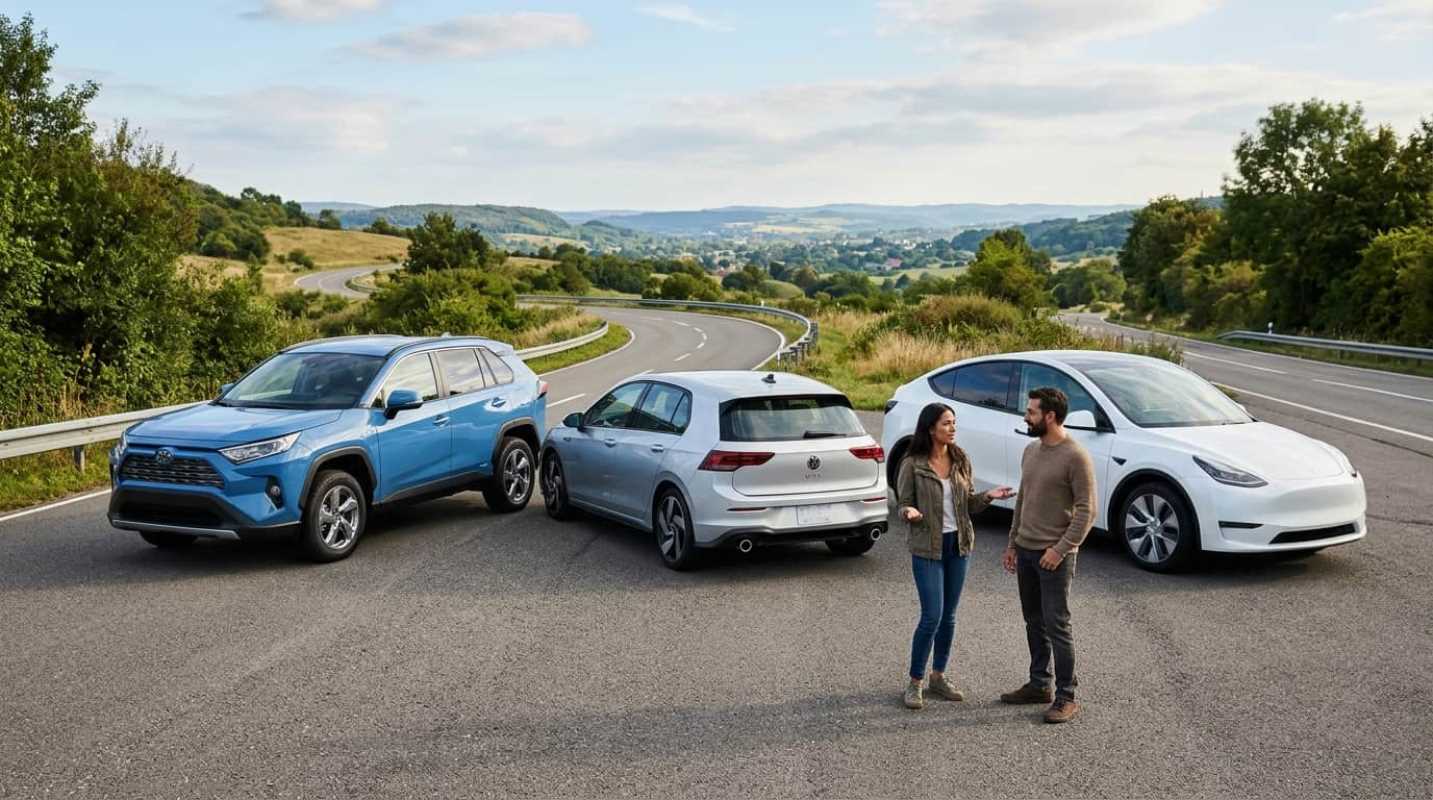
Here is the plain truth. There is no single winner that works for everyone. The best powertrain for you comes down to how you drive, where you park, and what you want your monthly budget to look like.
The Great Powertrain Debate
Automakers are pouring billions of dollars into electrification, yet showroom floors remain packed with all three powertrain styles. That variety exists for a simple reason. Drivers have completely different lives, commutes, and budgets.
A commuter living in a suburban home with a private garage faces a totally different reality than an apartment renter who parks on the street. A traveling sales rep logging 35,000 highway miles a year has needs that look nothing like a retiree driving 5,000 miles around town.
Instead of looking for the objectively superior machine, look for the machine that slots neatly into your current lifestyle. When you match the powertrain to your daily habits, you save money, eliminate daily headaches, and end up with a vehicle you actually enjoy owning.
The Case for Internal Combustion Engines
With all the buzz surrounding high-tech alternatives, it is easy to forget why traditional internal combustion engine (ICE) vehicles still make up a massive share of the market. They are familiar, dependable, and remarkably convenient.
The biggest advantage of a gas car remains the refueling network. There are over one hundred thousand gas stations scattered across the country. Whether you are driving through downtown Chicago or cruising through rural Wyoming, finding a pump takes minutes. You pull in, fill your tank in under five minutes, and get right back on the road with 400 miles of range in reserve.
Gas vehicles also maintain an edge for the upfront window sticker price. Entry-level gas sedans and compact crossovers are generally thousands of dollars cheaper than comparable hybrids or electric options.
If you do not drive very many miles each year, that lower purchase price matters a lot. When you drive less than 8,000 miles annually, your potential fuel savings from an electrified powertrain are minimal. It could take you eight to ten years just to recoup a $3,000 hybrid price premium at the pump.
Finally, traditional gas power remains the practical standard for drivers who frequently tow heavy trailers over long distances. Cold weather also barely makes a dent in a gas vehicle's usable range, making it a reliable workhorse in freezing northern climates.
Hybrid Vehicles and the Best of Both Worlds
Traditional hybrid electric vehicles (HEVs) have quietly become the undisputed sweet spot for millions of drivers. They give you superior fuel economy without forcing you to change a single daily habit.
You never have to plug a standard hybrid into an electrical outlet. Instead, the car uses a clever combination of a gas engine, an electric motor, and a small onboard battery pack. When you slow down or step on the brakes, the vehicle captures that kinetic energy and feeds it into the battery. The electric motor then shoulders the load during low-speed acceleration and stop-and-go driving.
Because of this dual setup, hybrids shine brightest in heavy city and suburban traffic. In situations where standard gas cars waste fuel idling and creeping forward, hybrids often run on electric power alone. Many modern hybrid sedans and crossovers easily deliver 45 to 55 miles per gallon.
That efficiency translates into real money. A hybrid can cut your per-mile fuel costs down to roughly 9.5 cents, compared to 15 to 19 cents for a traditional gas model. AAA research shows that when you factor in purchase price, maintenance, fuel, and resale value, hybrids frequently deliver the lowest five-year total cost of ownership on the market.¹
You also sidestep range anxiety completely. With gas tanks that often provide 500 to 600 miles of range, a hybrid is ready for a spontaneous cross-country road trip whenever you are.
Going Electric and Matching Lifestyle with Efficiency
Battery electric vehicles (BEVs) deliver an exceptionally smooth, quiet, and responsive driving experience. Stepping on the accelerator gives you instant torque with none of the gear shifts or engine roar of an old-school car.
For the right owner, going fully electric is also remarkably cost-effective. If your daily commute sits between 20 and 70 miles, an electric vehicle operates in its absolute prime.
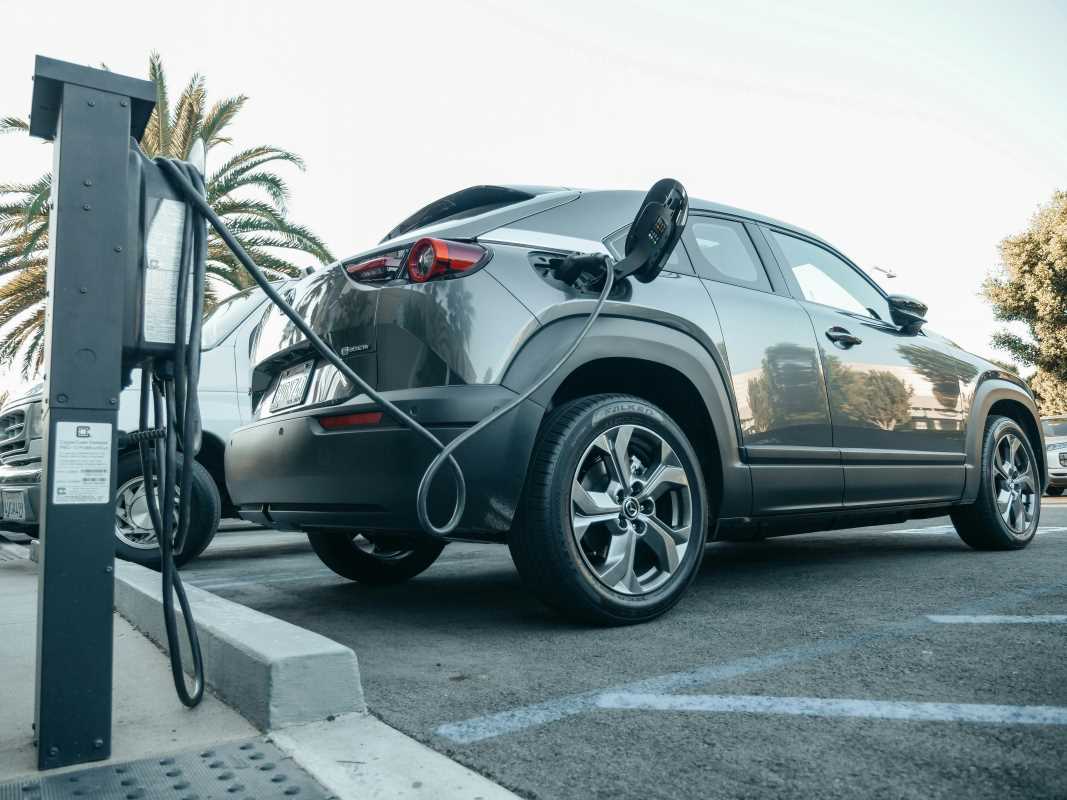
The secret to loving EV ownership comes down to your parking space. If you own a home or have dedicated overnight access to a 240-volt Level 2 charger, the ownership experience feels almost effortless. You plug in when you get home, and every morning you wake up to a completely full battery.
Charging at home on standard residential electric rates costs roughly 4.7 cents per mile. That can save you $800 to $1,200 every year compared to filling up a gas tank.
Electric powertrains also have far fewer moving parts. There is no motor oil to change, no spark plugs to swap, and no timing belts or exhaust systems to worry about. Regenerative braking means your brake pads can easily last past 80,000 miles.
There is a catch, though. If you cannot charge at home and must rely on public fast chargers, the economics shift quickly. Commercial charging rates often run three times higher than home electricity, wiping out much of your fuel savings. Plus, independent studies from the Harvard Business School reveal that public fast chargers historically had a first-time charging success rate of only 78 percent.² If you rent an apartment with street parking, dealing with broken public transportation systems and lines can turn EV ownership into a chore.
Crunching the Numbers on Total Cost of Ownership
To find out which powertrain actually saves you money, you have to look beyond the initial sticker price and examine total ownership expenses.
• Energy and fuel expenses: Pure electric vehicles charged at home win easily on energy costs, running around 5 cents per mile. Hybrids follow closely behind at around 9.5 cents per mile. Standard gas cars trail the pack, costing between 15 and 19 cents per mile depending on pump prices. Relying strictly on public fast chargers pushes EV costs right back up near hybrid levels.
• Maintenance and repairs: Electric cars require the least routine mechanical service, saving owners hundreds of dollars on fluid changes. But electric cars are heavy and generate intense instant torque, which causes them to wear through tires 20 to 30 percent faster than gas cars. Hybrids strike an impressive middle ground. Because the electric motor handles low-speed strain, hybrid gas engines experience very little mechanical wear.
• Depreciation and insurance costs: This is where many buyers get surprised. Data from CarEdge indicates that hybrids hold their resale value better than almost any other powertrain category, losing only about 35 percent of their value over five years.³ Used EVs, on the other hand, have faced steep depreciation due to rapid tech updates and market price cuts. Electric cars also cost roughly 15 to 25 percent more to insure because battery pack repairs and specialized parts remain pricey.
Final Verdict on Making the Right Call
Choosing the right car is not about picking the trendiest technology. It comes down to picking the tool that makes your daily life easier and keeps your bank account happy.
• Choose an electric vehicle if: You have a dedicated garage or driveway where you can install a home charger, you drive predictable daily commute miles, and you want minimal routine service visits.
• Choose a traditional hybrid if: You live in an apartment, drive lots of city miles, want maximum resale value, or frequently take long road trips without thinking about charging stations. For most drivers, this is the easiest financial win.
• Choose a plug-in hybrid if: You want to drive electric for a 30-mile commute during the week, but you want gas-powered freedom when heading out of town on the weekends.
• Choose a gas vehicle if: You drive fewer than 8,000 miles a year, need an affordable entry purchase price, tow heavy trailers, or live in a remote rural area.
Take an honest look at your weekly driving patterns, test drive each powertrain back to back, and pick the one that fits your routine. When the car fits your lifestyle, the savings and satisfaction follow naturally.
Sources:
1. AAA: Hybrids Win Ownership Cost Comparison Over EVs
https://www.carpro.com/blog/aaa-hybrids-win-ownership-cost-comparison-over-evs
2. The State of EV Charging in America
https://www.hbs.edu/bigs/the-state-of-ev-charging-in-america
3. Electric and Hybrid Retained Value Guide
https://caredge.com/guides/electric-hybrid-retained-value
*This article on GoMoto is for informational and educational purposes only. Readers are encouraged to consult qualified professionals and verify details with official sources before making decisions. This content does not constitute professional advice.*